Working in Germany from Zimbabwe
Complete guide to EU Blue Card, Opportunity Card, and German immigration for Zimbabwean citizens in 2026
Germany is Europe's largest economy and has undergone major immigration reforms to address severe labour shortages. With an ageing population and over 1.7 million unfilled positions, Germany actively recruits skilled workers from outside the EU. The Skilled Immigration Act (Fachkraefteeinwanderungsgesetz) and the new Opportunity Card (Chancenkarte) have made it significantly easier for Zimbabweans to work and settle in Germany.
EU Blue Card
The EU Blue Card is the most attractive work permit in Europe, offering a fast path to permanent residency.
| Standard salary threshold | EUR 45,300/year (2026-2026) |
| Shortage occupation salary | EUR 41,042/year (healthcare, IT, engineering, sciences) |
| Qualification | University degree recognised by anabin database or comparable |
| Language | Not required for application, but B1 German recommended |
| Job offer | Required - must match your qualification |
| Duration | 4 years (or contract length + 3 months) |
| PR pathway | 21 months (with B1 German) or 27 months (with A1 German) |
| Application fee | EUR 75-100 (visa) + EUR 100 (residence permit) |
Shortage Occupations (Lower Salary Threshold)
Opportunity Card (Chancenkarte)
Introduced in June 2024, the Opportunity Card lets you come to Germany to search for a job for up to 12 months based on a points system.
Points System (need 6+ points)
| Factor | Criteria | Points |
|---|---|---|
| Qualifications | Recognised degree or vocational qualification | 4 |
| Qualification recognised by German state | 1 (bonus) | |
| Language | German B2 or higher | 3 |
| German B1 | 2 | |
| German A2 | 1 | |
| English C1 | 1 | |
| Work Experience | 5+ years in qualification field | 3 |
| 2-4 years in qualification field | 2 | |
| Age | Under 35 years old | 2 |
| Germany Connection | Previous stay in Germany (6+ months) | 1 |
Requirements
- Minimum 6 points
- Proof of funds: EUR 1,027/month (or blocked account)
- Can work up to 20 hours/week while job searching
- Can do trial work (Probebeschaeftigung) for 2 weeks
- Valid for 12 months, converts to work permit once employed
IT Specialists Route (No Degree Required)
Germany offers a special pathway for IT professionals without a university degree:
- 3+ years of professional IT experience (in the last 7 years)
- Job offer with minimum EUR 41,042/year salary
- German language skills (A2 minimum) or English at B2 if the employer language is English
- Covers: software developers, system administrators, network engineers, data scientists, cybersecurity analysts
Salary Guide
| Profession | Annual Salary (EUR) | Notes |
|---|---|---|
| Software Developer | 55,000 - 80,000 | Higher in Munich/Frankfurt |
| Registered Nurse | 35,000 - 45,000 | Plus shift allowances |
| Mechanical Engineer | 50,000 - 70,000 | Automotive sector pays more |
| Electrical Engineer | 48,000 - 65,000 | High demand in renewables |
| Accountant / Finance | 45,000 - 65,000 | IFRS knowledge valued |
| Care Worker (Pflege) | 28,000 - 38,000 | Acute shortage, fast visa |
| Data Scientist | 55,000 - 85,000 | Berlin/Munich tech hubs |
Salaries are gross. Germany has progressive income tax (14-45%) plus social contributions (~20% employee share for health, pension, unemployment, long-term care).
Application Process
- Credential recognition: Check your degree on the anabin database or apply for recognition through the relevant German authority (ZAB for academic, chambers for vocational)
- Language preparation: Study German at the Goethe Institut in Harare or via Deutsche Welle online courses. Aim for at least A2 for Opportunity Card, B1 for Blue Card advantage
- Job search: Use EURES, Make-it-in-Germany portal, LinkedIn, StepStone, Indeed.de, and Xing
- Secure job offer: Employer may need to obtain approval from the Federal Employment Agency (BA)
- Apply for visa: Book appointment at the German Embassy in Harare. Submit application with job contract, credential recognition, and proof of qualifications
- Processing: 4-8 weeks for Blue Card visa, 6-12 weeks for other work visas
- Arrive and register: Register at the local Auslaenderbehoerde (foreigners' office) within 2 weeks and obtain residence permit
Frequently Asked Questions
Quick Facts
- Blue Card processing: 4-8 weeks
- Blue Card salary: EUR 45,300+
- PR in: 21 months (with B1 German)
- Language: German helpful, not always required
- Universities: Tuition-free for all
- Healthcare: Covered by employment
Official Resources
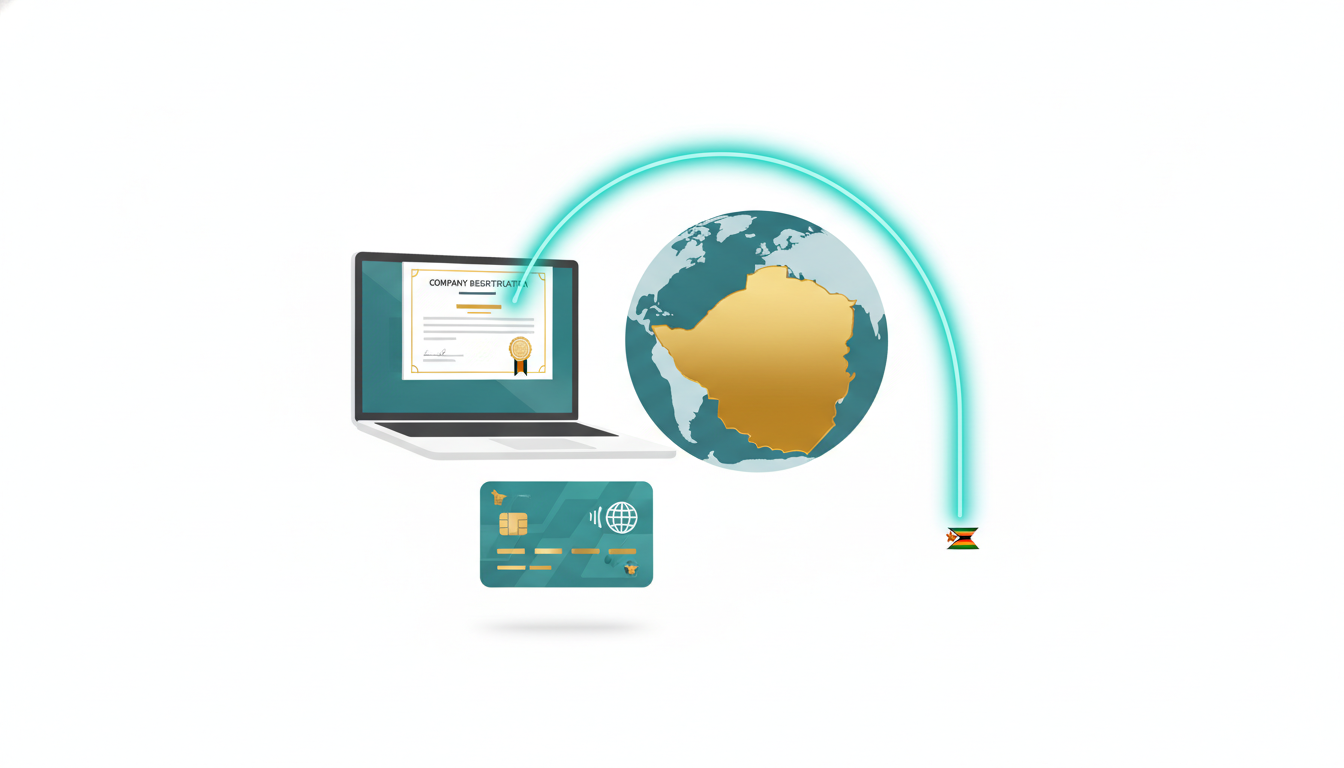
Apply for a Private Limited Company or PBC 100% online. Pay online by card or Zimbabwe payment methods. RegisterCompany.co.zw handles the filing and sends your documents digitally.